How to Verify Property Documents Before Buying in Nepal
Buying land or a house in Nepal is a major investment. Before paying an advance or signing a land sale agreement, it is essential to verify the property documents, ownership, land details, and legal status carefully. Proper document verification can help buyers avoid fraud, ownership disputes, encroachment, and other legal problems.
This guide explains how to verify property documents before buying land or a house in Nepal.
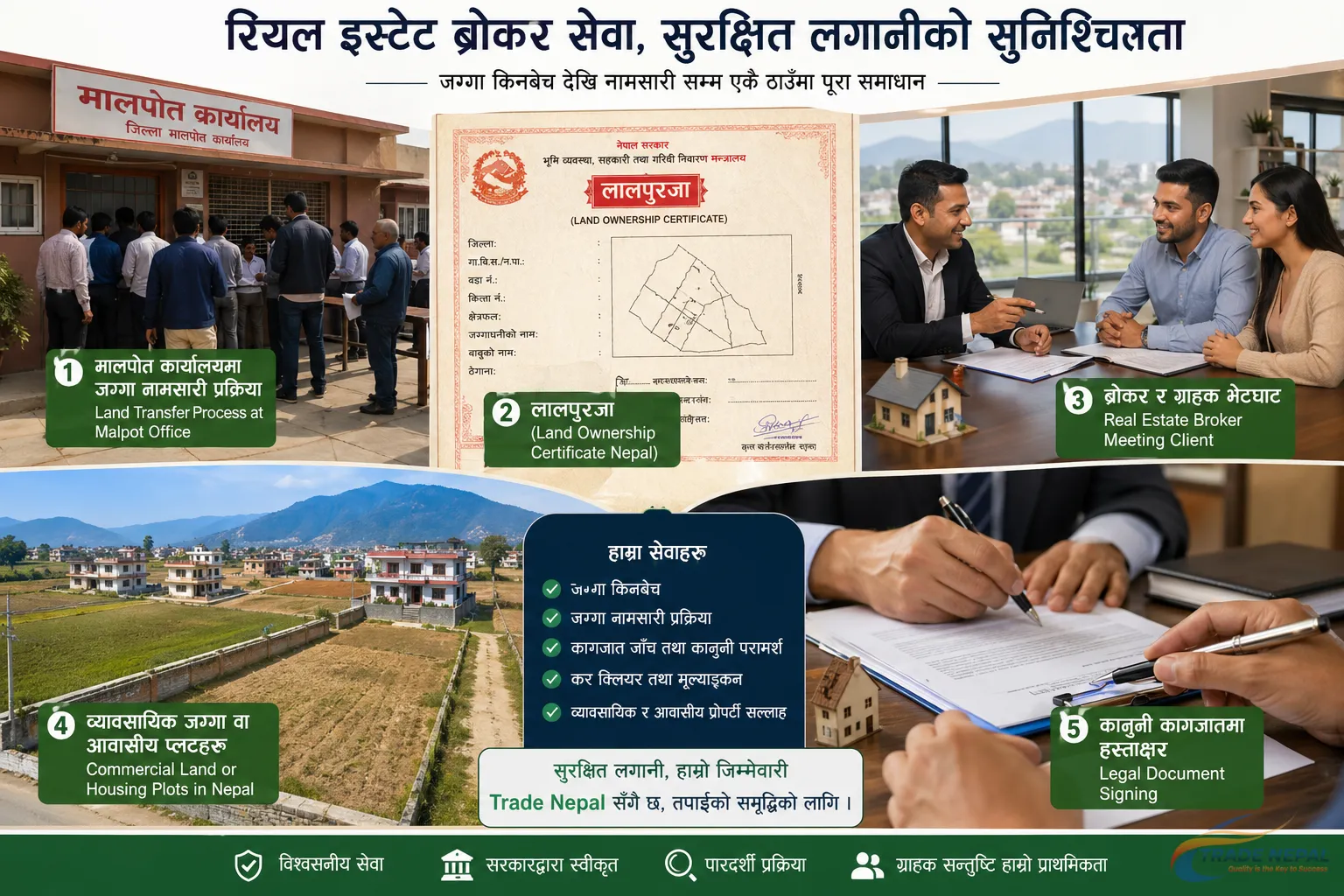
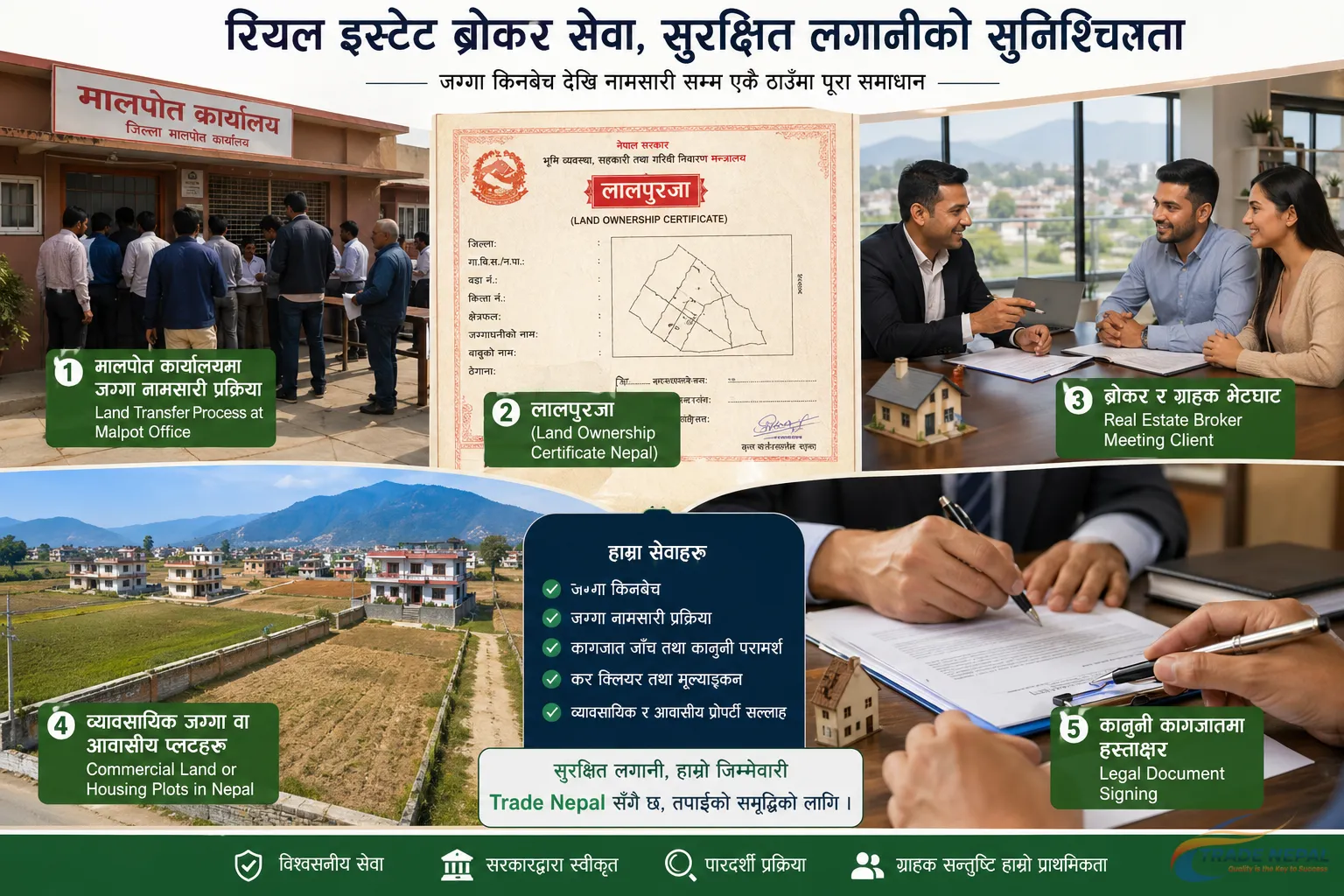
1. Verify the Lalpurja (Land Ownership Certificate)
The Lalpurja is one of the most important documents proving land ownership. Before purchasing a property, carefully check:
- Name of the landowner
- Father's/mother's or spouse's name, where applicable
- Citizenship details
- Kitta number
- Land area
- Land location
- Land classification/details
- Registration and ownership information
The seller's name and details should match the official land records. Do not rely only on a photocopy provided by the seller.
2. Check the Kitta Number and Land Area
The Kitta Number uniquely identifies a parcel of land. Compare the kitta number and area mentioned in the Lalpurja with the official land records and cadastral map.
Check whether:
- The kitta number is correct
- The land area matches the Lalpurja
- The physical land matches the cadastral map
- There is any subdivision or merging of the kitta
- The boundaries correspond with the actual property
A small difference between documents and the physical property should not be ignored.
3. Verify the Property at the Malpot Office
The Malpot Office (Land Revenue Office) maintains important records relating to land ownership and registration.
Before purchasing, request verification of the property records through the relevant Malpot Office. Check:
- Current registered owner
- Ownership history
- Registration details
- Mortgage or loan-related restrictions
- Any रोक्का (rokka) or restriction
- Transfer history
- Other registered claims or transactions
It is strongly recommended to complete official verification before making a substantial payment.
4. Check the Napi Office and Cadastral Map
The Napi Office (Survey Office) can help verify the technical details and boundaries of the land.
Compare the property with the cadastral map and verify:
- Kitta number
- Land dimensions
- Boundary lines
- Adjacent plots
- Road access
- Actual location
- Any apparent encroachment
A physical site inspection should be done together with document verification.
5. Verify the Seller's Identity
The person selling the property should be the registered owner or a legally authorized representative.
Compare the seller's:
- Citizenship certificate
- Name
- Photograph
- Signature
- Address
- Lalpurja details
If someone is selling property on behalf of the owner, carefully verify the Power of Attorney (अधिकृत वारेसनामा) or other applicable authorization documents.
6. Check for Mortgage, Rokka, or Legal Restrictions
One of the most important steps is checking whether the property has any restrictions.
Before buying, verify whether the land is:
- Mortgaged with a bank or financial institution
- Subject to रोक्का
- Involved in a court case
- Subject to inheritance or ownership disputes
- Under another legal restriction
- Already committed or transferred to another party
Never assume that a property is free from liabilities simply because the seller says it is.
7. Check Road Access and Right of Way
Road access can significantly affect the value and usability of land.
Verify the road shown in official records against the road existing on the ground. Also check whether access is:
- Registered or legally recognized
- Public or private
- Wide enough for intended use
- Connected to the main road
- Affected by any proposed road expansion
Do not rely solely on verbal promises about future roads.
8. Verify Land Use and Local Government Records
Before buying land for a specific purpose—such as a house, commercial building, apartment, or business—check the applicable municipality or rural municipality records and planning requirements.
Verify relevant matters such as:
- Land-use classification
- Building restrictions
- Road setbacks
- Building permit requirements
- Zoning or planning restrictions
- Local taxes and dues
Requirements can vary depending on the municipality and location.
9. Check Land and Property Tax Status
Ask for evidence that applicable land/property taxes and local government dues have been paid.
Check for:
- Land revenue payments
- Local property/land tax
- Municipal or rural municipality dues
- Other applicable outstanding amounts
Outstanding dues should be clarified before completing the transaction.
10. Verify Inheritance and Family Ownership
Extra care is required when the property has been inherited.
Check whether:
- The seller is the sole legal owner
- Other heirs have ownership rights
- Necessary inheritance/name-transfer procedures have been completed
- All required parties have consented where legally necessary
- There are disputes among family members
Do not proceed based only on a family member's verbal assurance.
11. Check for Existing Buildings and Construction Documents
If you are purchasing a house or building along with the land, verify the building-related documents as well.
Check, where applicable:
- Building permit
- Approved building drawings
- Completion certificate
- House number
- Construction approval
- Property tax records
- Actual building size versus approved documents
The building on the property should be consistent with the relevant municipal records.
12. Conduct a Physical Site Inspection
Document verification should always be combined with a physical inspection.
Visit the property and confirm:
- Exact location
- Four-side boundaries
- Road access
- Land area
- Existing structures
- Neighboring properties
- Drainage and utilities
- Possible encroachment
- Actual condition of the property
Ideally, compare the physical site with the cadastral map and official documents.
13. Be Careful With Advance Payments
Avoid paying a large amount before completing document verification.
Before paying an advance, clearly document:
- Buyer and seller details
- Property description
- Kitta number
- Land area
- Agreed price
- Advance amount
- Payment method
- Completion date
- Conditions of the transaction
- Refund/forfeiture terms, where applicable
Use traceable payment methods and retain all receipts and agreements.
14. Get Legal and Professional Advice
Property transactions can involve complicated ownership, inheritance, registration, tax, and planning issues.
For high-value transactions or properties with complicated ownership histories, consider consulting:
- A qualified property lawyer
- A licensed/authorized land professional
- A qualified surveyor
- Relevant Malpot Office officials
- Relevant Napi Office officials
- Municipality/rural municipality officials
Professional verification can be especially valuable when buying land from an unfamiliar seller.
Property Document Verification Checklist in Nepal
Before purchasing land or a house, make sure you have checked:
- Original Lalpurja and ownership details
- Seller's citizenship and identity
- Kitta number and land area
- Napi/cadastral map
- Physical boundaries
- Road access
- Malpot Office records
- Rokka or mortgage status
- Court/legal dispute status
- Land and local taxes
- Inheritance/ownership claims
- Building permits, if applicable
- Municipality records
- Sale agreement
- Payment receipts
- Final registration requirements
Common Mistakes to Avoid When Buying Property in Nepal
1. Trusting Only Photocopies
Always verify important documents against official records.
2. Paying Before Verification
Do not make a substantial payment simply because the property appears attractive.
3. Ignoring Kitta Boundaries
A property's actual boundaries may not always match what is verbally represented.
4. Not Checking Rokka or Mortgage
A property may have restrictions that affect its transferability.
5. Ignoring Family or Inheritance Claims
Inherited properties require additional verification.
6. Relying Only on a Broker or Seller
A broker can assist with the transaction, but buyers should independently verify important legal and property information.
Final Thoughts
Property document verification is one of the most important steps before buying land or a house in Nepal. Buyers should verify the Lalpurja, kitta number, cadastral map, ownership, Malpot records, restrictions, taxes, road access, and municipal information before making a major financial commitment.
A careful verification process can reduce the risk of property fraud, ownership disputes, hidden liabilities, boundary problems, and registration difficulties.
If you are planning to buy land or a house in Kathmandu, Pokhara, Bharatpur, Butwal, Hetauda, Dharan, Itahari, Nepalgunj, Dhangadhi, or other areas of Nepal, professional property verification and due diligence can make the buying process safer and more transparent.